


About Us

About organisation
Transforming Higher Education Through Thought-Leadership
The Free Education Movement (FEM) is a professional, academic, and non-political organisation that provides thought leadership, research-based advocacy, and consulting services within the Higher Education and Training sector in South Africa and beyond. FEM is positioned as a critical player in shaping equitable, inclusive, and forward-looking education policies and practices that address the urgent socio-economic needs of the country.
Our primary mandate is to a foster post-school education and training system that is:
- Accessible
- Employability-Focused
- Gender-Just
- Socially Responsive
Through strategic interventions including research publications, policy dialogues, conferences, capacity building workshops, colloquiums and consultancy engagements, FEM seeks to influence both institutional practices and national education policy frameworks.
Vision Statement
To be the leading independent thought leader and advisory platform in transforming higher education into an inclusive, socially responsive, and economically empowering sector.
Mission Statement
To promote and advance access to quality higher education, gender justice, graduate employability, and responsive curriculum development through research, policy engagement, and capacity-building initiatives.
Core Values
- Equity and Social Justice
- Professionalism
- Public Good Orientation
- Academic Integrity
- Gender Inclusivity
- Evidence-Based Advocacy
About Team
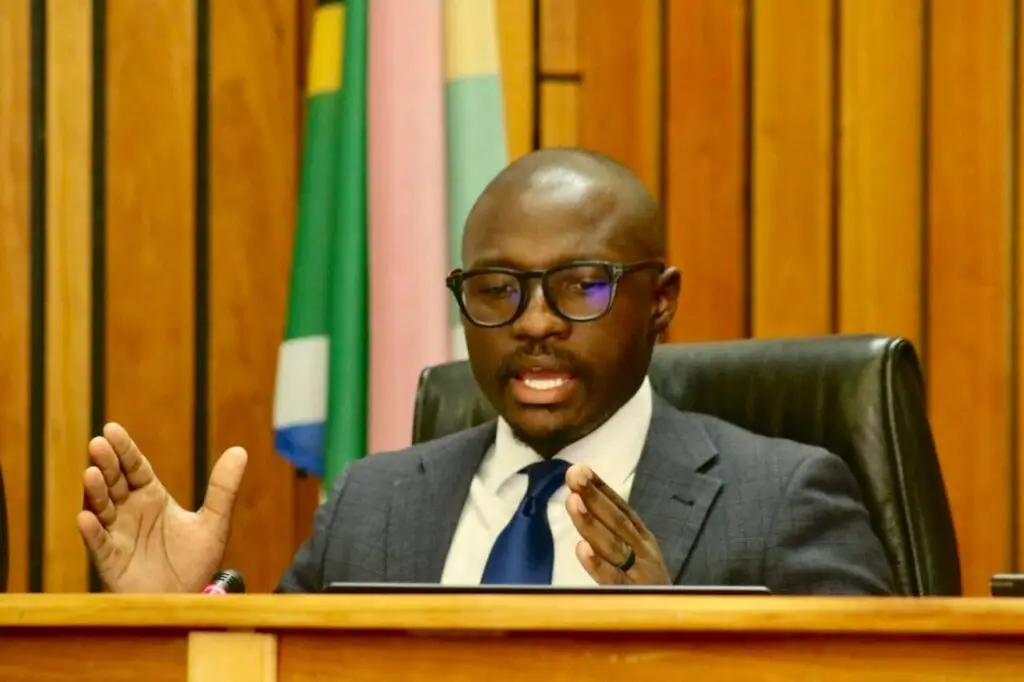
Asive Dlanjwa
Founder and Executive Director | Free Education Movement (FEM)
As the Founder of Free Education Movement (FEM), Mr Dlanjwa brings a wealth of experience in student leadership, institutional governance, policy development, and stakeholder engagement.
Asive Dlanjwa is a distinguished higher education strategist, public policy advisor, and youth development advocate, widely recognised for his extensive leadership within the post-school education and training sector in South Africa. With more than nine years of leadership experience in the higher education sector, Mr Dlanjwa has consistently demonstrated a deep commitment to institutional transformation, student development, and policy innovation.
FEM is a professional, academic, and non-partisan organisation dedicated to advancing accessible, equitable, and socially responsive higher education systems. Under Mr Dlanjwa’s leadership, the organisation has positioned itself as a thought leader in research-based advocacy and consultative engagements, shaping inclusive and future-fit education policies in South Africa and beyond.
Mr Dlanjwa’s track record in the higher education space is rooted in a strong tradition of progressive student activism and public service. He served as SRC President at the University of the Free State and previously as Human Rights Ambassador. His leadership trajectory in the South African Students Congress (SASCO) includes roles as Branch Chairperson at UFS, Regional Chairperson in Mangaung, Provincial Chairperson of SASCO Free State, and Deputy Secretary General of SASCO at the national level.
Nationally, he served with distinction on the National Executive Committee of the South African Union of Students (SAUS), where he also held the portfolio of National Spokesperson. In these capacities, Mr Dlanjwa played a key role in articulating the voice of students on issues of funding, governance, transformation, and post-graduate opportunities across South African universities and TVET colleges.
In government, he has served as Youth Advisor and Coordinator in the Office of the Premier in the Free State Provincial Government, where he contributed to youth-focused policy design and intergovernmental coordination. He currently serves as Strategic Advisor to the Office of the Speaker in the Free State Legislature, where his expertise continues to inform legislative oversight and youth development strategies.
Mr Dlanjwa is deeply committed to transforming higher education into a public good that meets the aspirations of working-class and historically marginalised communities. His founding vision for FEM is inspired by the need for evidence-driven, consultative approaches to building a post-school system that is employability-focused, gender-just, and economically transformative.

Lerato Ndlovu
Director Operations | Free Education Movement (FEM)
Lerato Bathseba Ndlovu is a development practitioner who is a catalytic force in South Africa’s higher education and skills development landscape. A bold and unapologetic advocate for economic justice through education, she has spent over seven years at the coalface of human capital transformation: designing, implementing and driving results-oriented programmes that speak directly to the country’s most urgent developmental fault lines: youth unemployment, skills development, systemic exclusion, and institutional inertia.
Ms. Ndlovu made history as the first Black woman elected President of the University of Pretoria’s Student Representative Council, simultaneously serving on the University Council and Institutional Forum. A symbolic feat and a redefinition of power in spaces historically resistant to black female leadership. Her tenure was symbolic, strategic, disruptive, and deeply grounded in building generational pipelines of capable public leadership.
She is a formidable presence across academia, government and civil society, leading cutting-edge skills development initiatives, advising on inclusive economic policy, and shaping learning ecosystems fit for the future. Her work spans from developing governance-focused curricula for public institutions to spearheading research on the social return of community investments in deeply marginalised areas. She has collaborated with key national entities, including DHET, NSFAS, SASSAP and Higher Health, earning her credibility not only as a thinker but a doer.
Ms. Ndlovu holds a Master of Social Science in Development Studies (with Economics) from the University of KwaZulu-Natal, where she earned a distinction for her dissertation, which interrogated the nexus between reindustrialisation, human capital, and employment in post-apartheid South Africa. Her academic grounding, which includes a Political Science Honour’s degree and Bachelor’s from the University of Pretoria, is both multidisciplinary and militant in its application to real-world development crises.
Ms. Ndlovu is preparing to pursue a PhD focused on the intersections between skills development, the crisis of youth unemployment, and the rapid technological and economic transitions reshaping the global and domestic policy terrain. Her future research is set to provoke both scholarship and system-level innovation in how South Africa responds to the global skills revolution.
From leading robotics interventions in township schools to chairing national 4IR youth platforms, Lerato has proven that visionary leadership must be both strategic and rooted. She is a generational asset, equally comfortable in the boardroom, the policy lab, or the community hall, and her compass is fixed firmly on a future where no one is locked out of opportunity.